
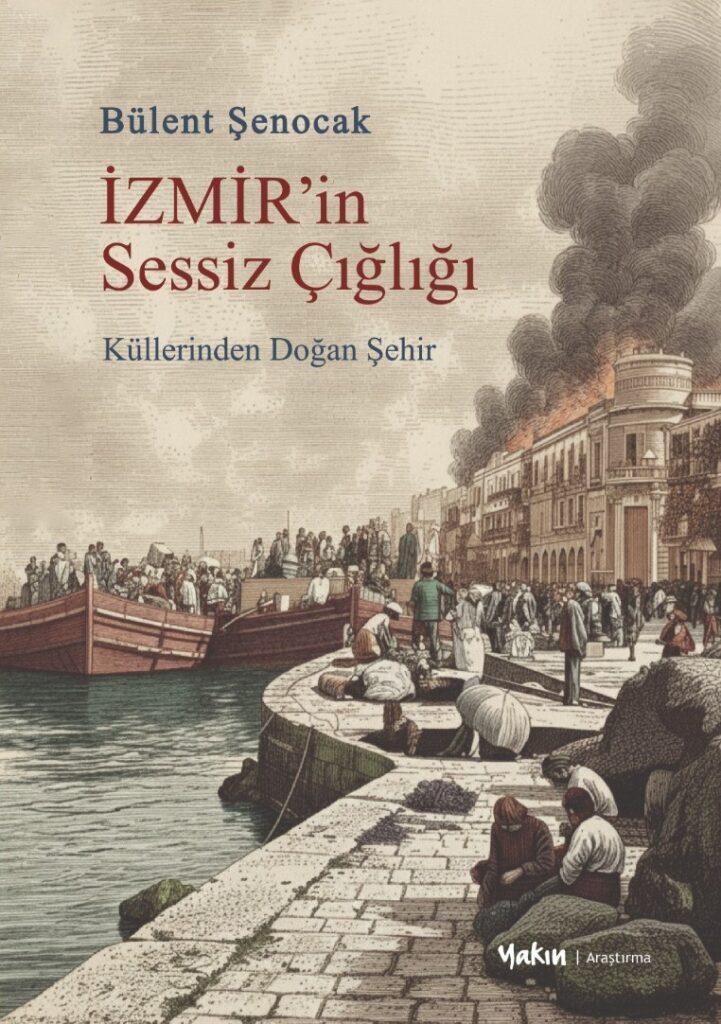
İzmir’in Sessiz Çığlığı – Küllerinden Doğan Şehir is a research study examining how an ancient port city, where different cultures, beliefs, and lifestyles existed side by side for centuries, was silenced at a moment of historical rupture. İzmir was a unique space of coexistence that brought together the realism of the West with the imagination of the East, church bells with calls to prayer, and the melodies of different languages with the sounds of daily life in the same space.
This richness turned into the most fragile point during periods when nationalism hardened. In this book, moving beyond narratives simplified by ideological frameworks and reduced to a single dimension, the memory of İzmir is re-read through documents, testimonies, and architectural traces. The great fire of 1922 destroyed not only houses and streets but also languages, melodies, memories, and the possibility of coexistence. The study addresses this destruction not merely as a physical disaster, but as a multi-layered cultural and social rupture.
İzmir 1922 proceeds from the idea that claiming the past is also claiming the future. It argues that the city's memory is neither the property of a single nation nor a tool for political calculations. The traces left by all the people who have lived on these lands for centuries constitute the true history of İzmir. The book aims to make visible the story not of the hands that hold sway in history writing, but of the hands that build, sustain, and create together. Today's İzmir, as a city risen upon the ashes of the fire, carries within it both pain and resistance. Despite renewed doors, changed street names, and transformed spaces, the city's silent scream can still be heard as the wind blows. This work is a call to memory for those who wish to trace that scream.